How to make a rain garden
Or how we did it at the Goulburn Community Garden
Rain gardens are beautiful, low-lying areas planted with deep-rooted, water-loving native plants. They act as a natural bowl that catch stormwater runoff and allow it to sink into the soil.
What are the benefits?
Unmanaged stormwater can cause a lot of damage. In low lying areas stormwater collects in puddles causing root rot, soil compaction and mosquito breeding areas. On sloping ground, stormwater can strip topsoil, expose roots and damage infrastructure as it races downhill. Raingardens effectively manage stormwater and allow it to slowly and safely filter into the soil.
Raingardens need to be planted with deep-rooted species that can tolerate both inundation and dry times. These plants filter pollutants from stormwater before they enter drains.
Once established rain gardens require little or no watering. And finally, rain gardens attract birds, butterflies and pollinators.
What’s not to like?
How we did it
We had limited space for a water tank on our shelter structure. We knew that during heavy rain it couldn’t hold all the water that collects on the structure roof. So we decided to build a rain garden to capture the excess.
To make our rain garden we…
Checked that there were no utilities or pipes in the area
Marked out the shape
Dug a trench
Created a berm behind the trench to hold water where we want it
Plumbed the tank overflow pipe into ag pipe. We placed ag pipe in the trench and covered it with gravel. Note: Ag pipe is PVC pipe with lots of slotted holes. Gravity transports the bulk of the water away from the tank, and the holes in the pipe allow it to seep out into the soil.
Added rocks for interest
Mulched with wood chip to hold water and reduce weeds
Plant selection
Rain garden plants need to be carefully chosen so that they can tolerate both inundation and dry periods. Into the gravel we planted native grasses:
Poa labillardieri – Common Tussock Grass
Ficinia nodosa – Knobby Club Rush
Lomandra longifolia ‘Tanika’
Dianella revoluta – Spreading Flax Lily
Into the middle of the arc created by the rain garden we planted a Crepe Myrtle ‘Tonto’ to commemorate a much-loved garden member. Once the tree grows its roots will be able to reach into the rain garden and draw up water.
Then we planted shade tolerant Correas along the back fence.
Maintenance
Recommend using wood chip mulch to retain moisture and reduce weeds.
We have been weeding regularly while plants are young. When plants are established, they will shade out weeds better.
A few good rainfalls since the garden was installed have kept the grasses looking healthy. However, they may need watering for the first year or so until they are established.
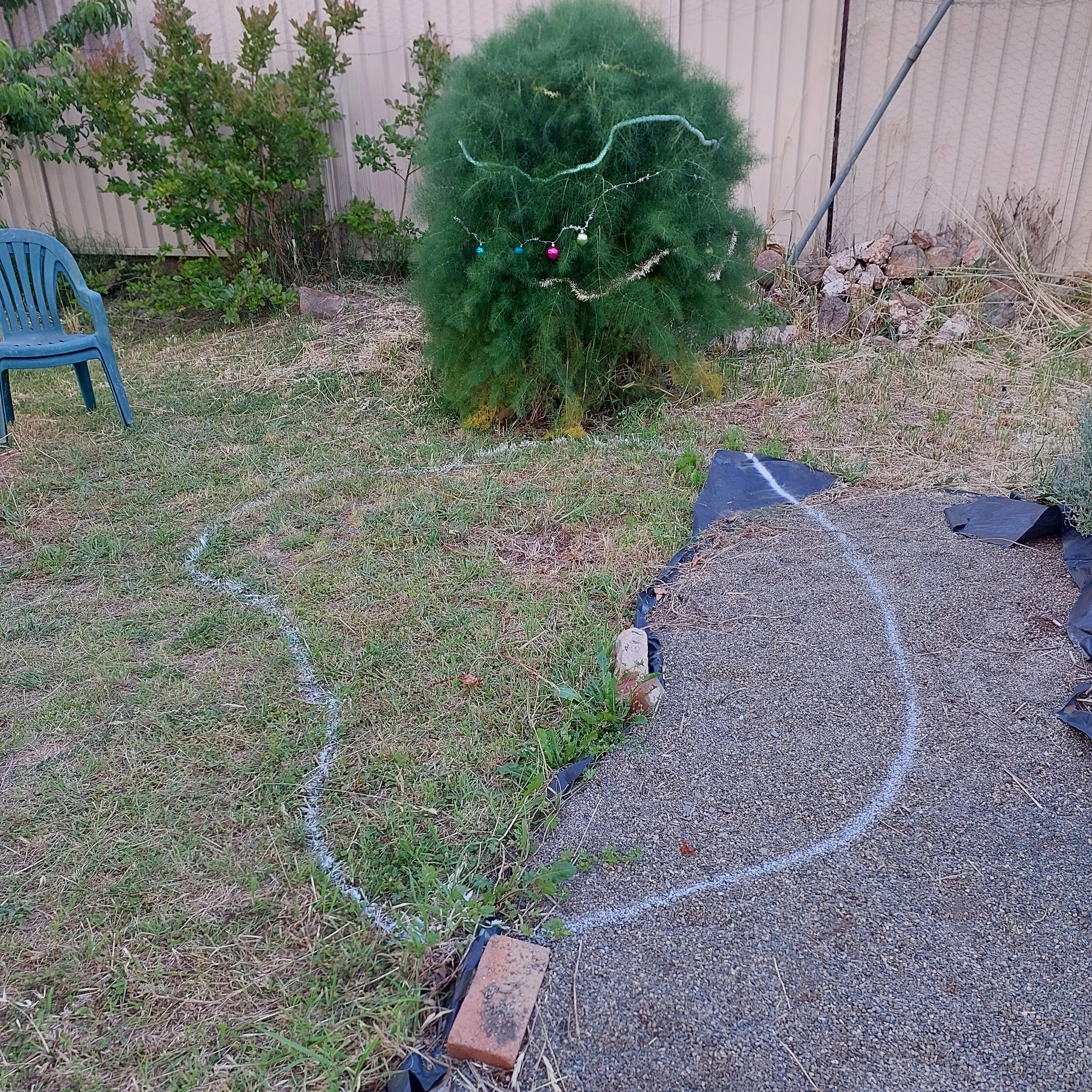
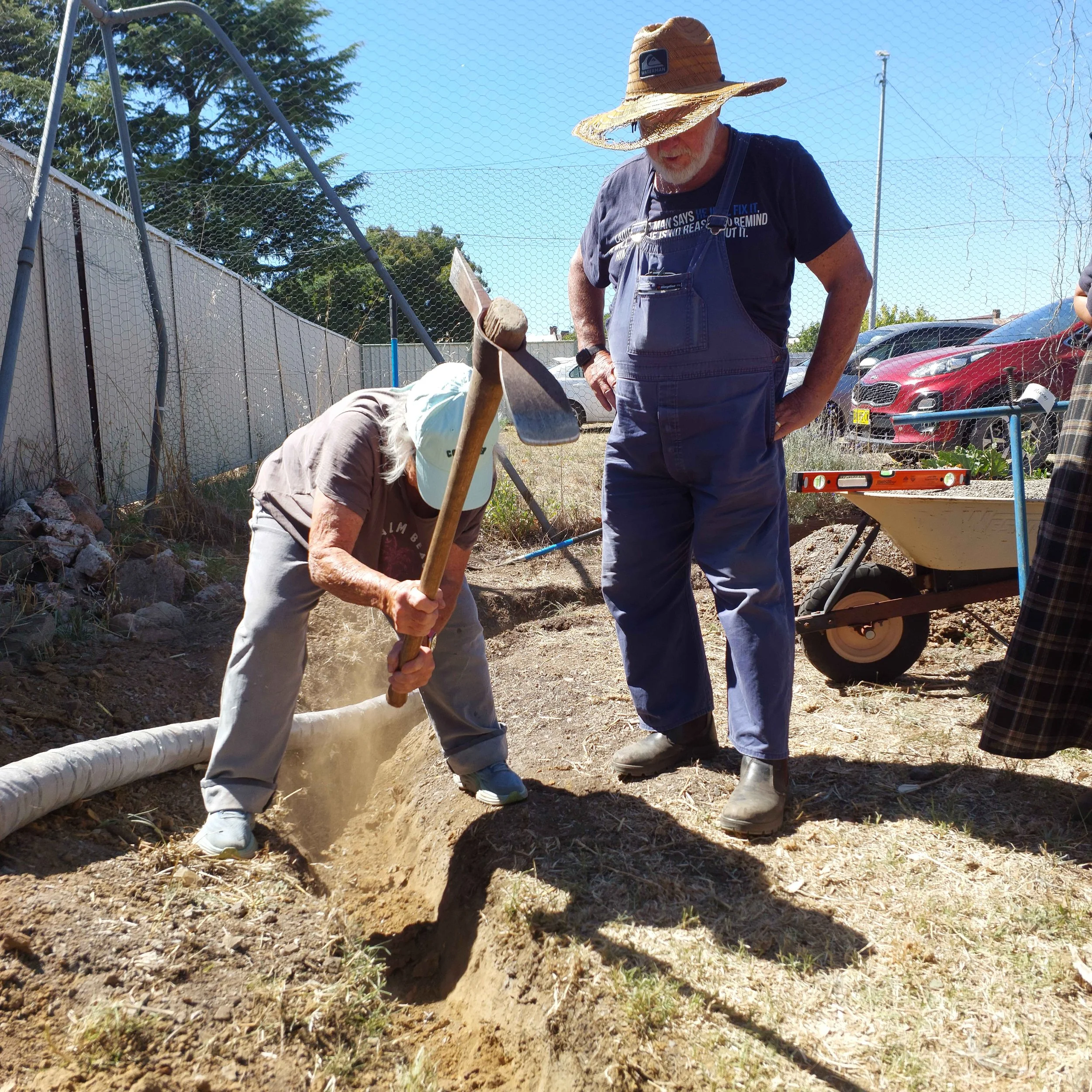
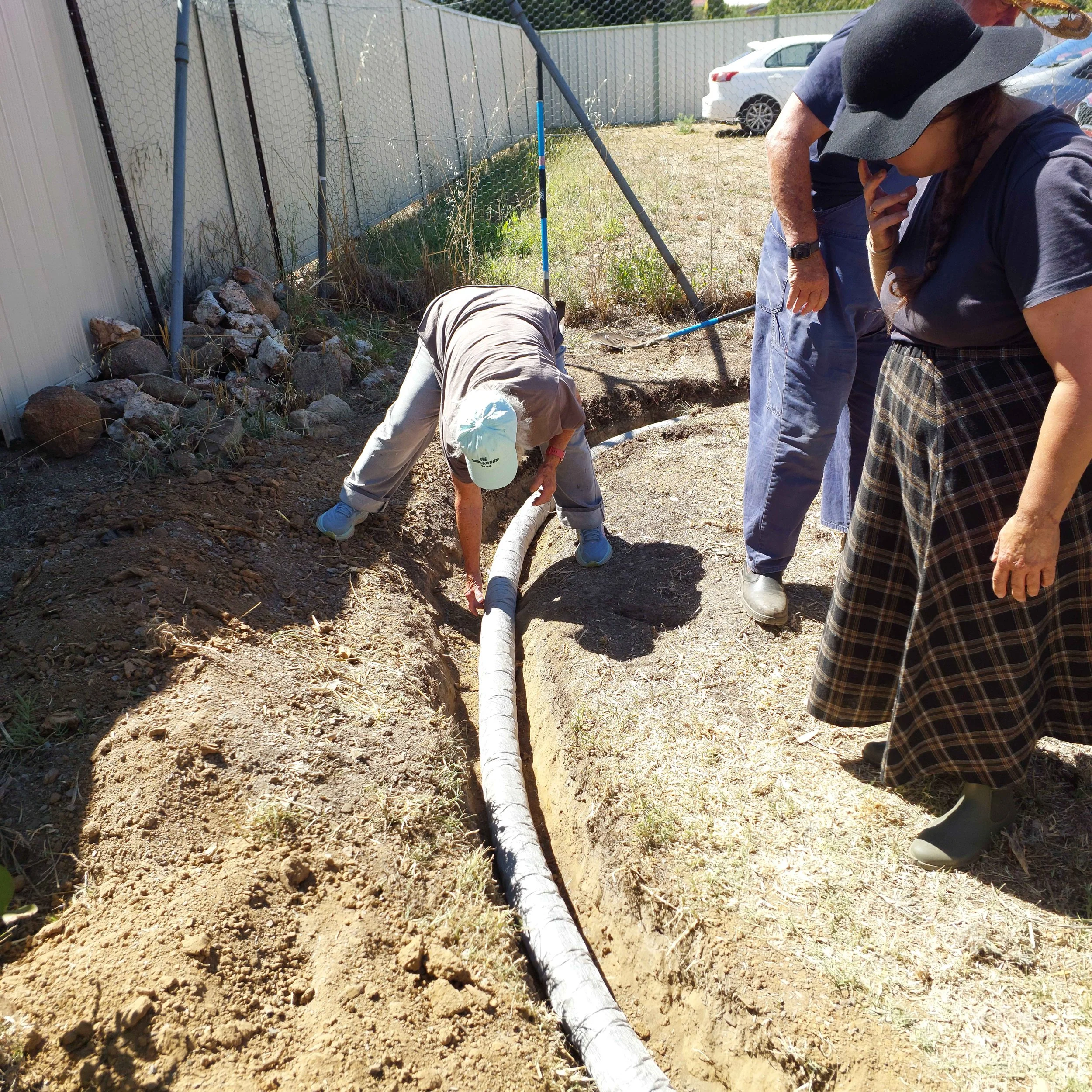
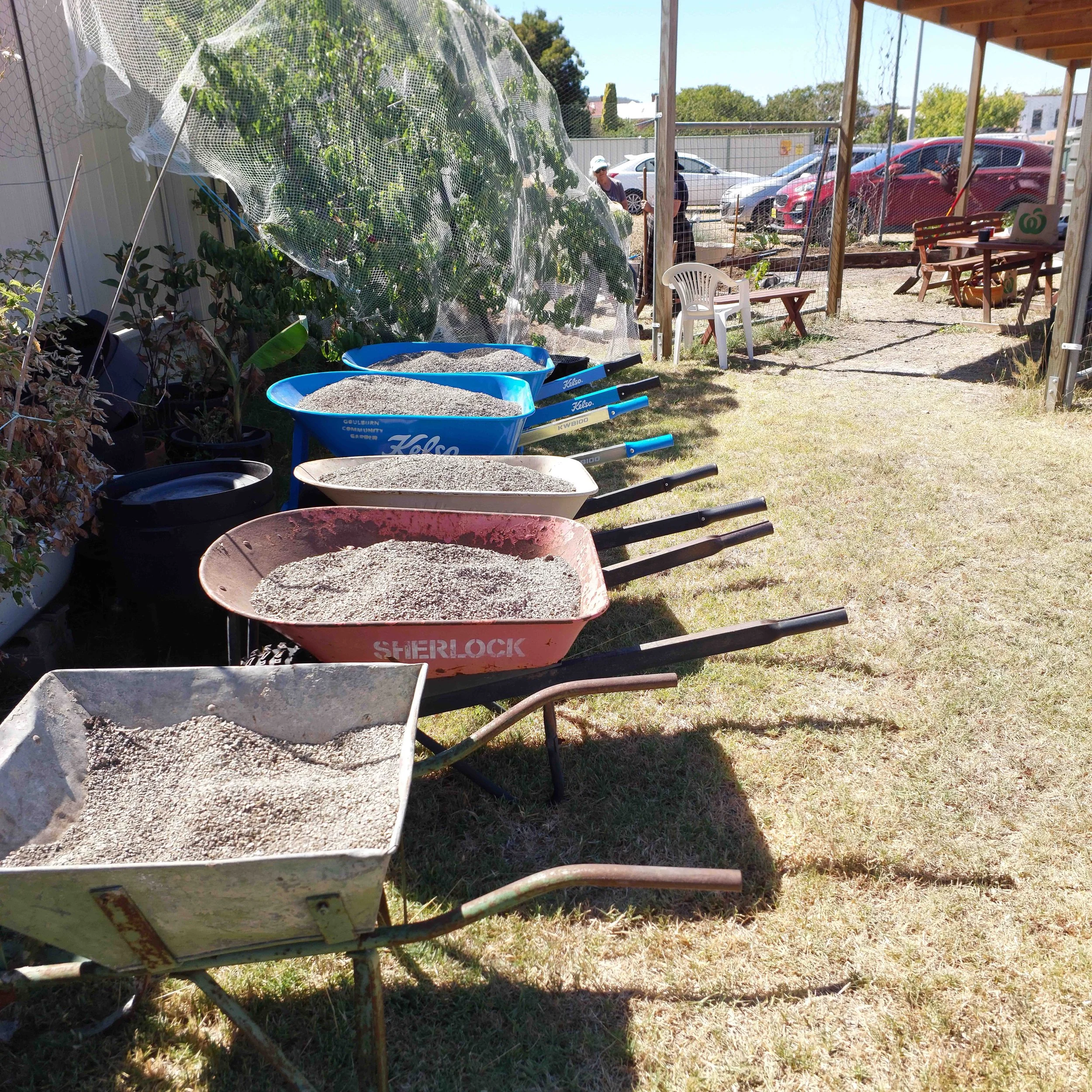
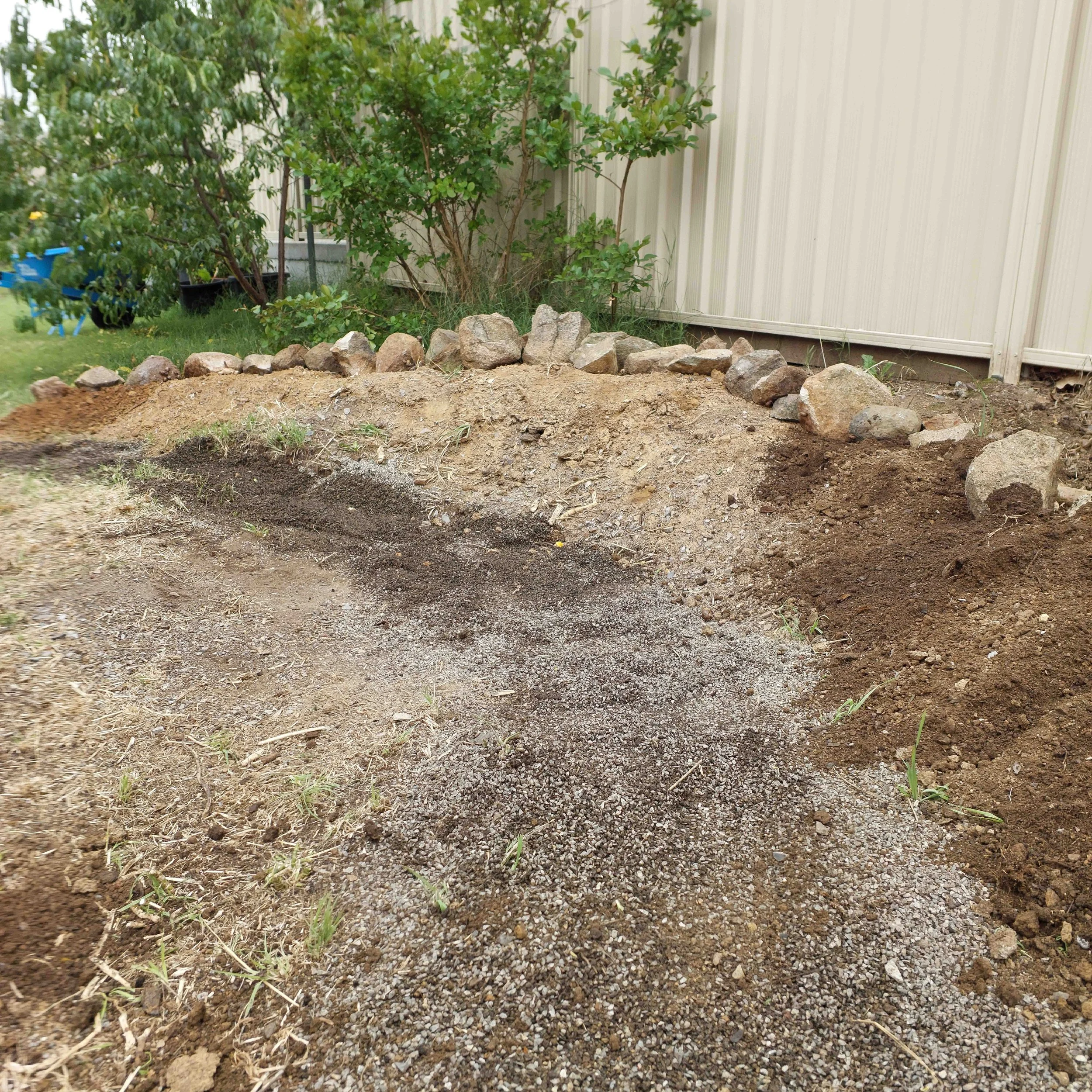
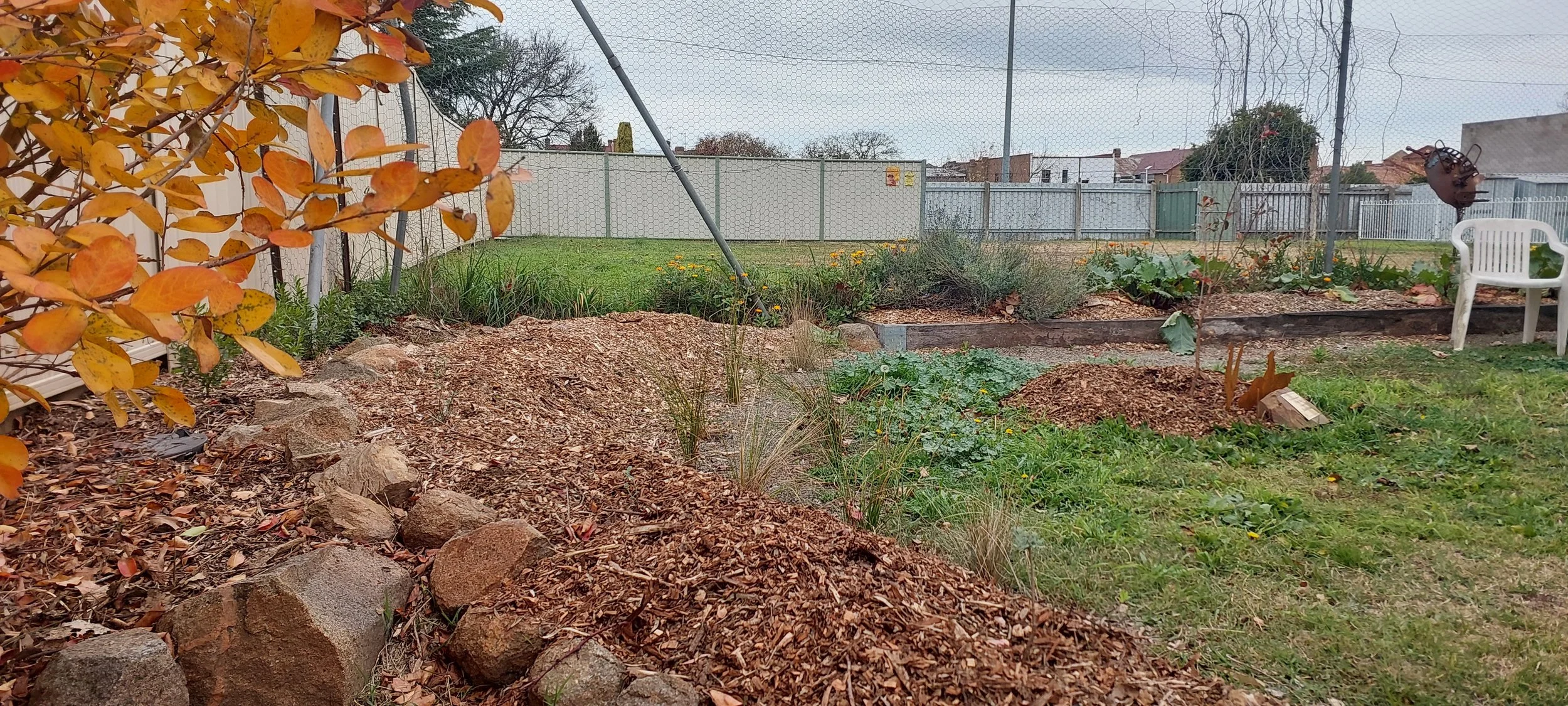
Image 1- marking out the shape
Image 2 – Digging the trench
Image 3 – laying ag pipe
Image 4 - Gravel ready for filling in the trench
Image 5 – Berm constructed and ready for planting. Rocks added.
Image 6 - After planting and mulching