How to manage wind
What’s the hardest thing about establishing a garden from scratch? For my money, it’s wind.
Wind rapidly dries out foliage and soil, limits plant growth, affects plant form and can break branches, uproot young trees and even blow over established trees.
Good garden planning uses strategic wind protection—primarily targeting winds from the west and north-west, as well as cold southerlies.
A well-designed windbreak can slow wind speeds up to 80%. Its protective zone extends across the landscape up to 20 times the height of the trees, with best wind protection occurring within 10 times their height.
Features of an effective windbreak
Orientation: Position the windbreak perpendicular to the direction of the prevailing wind.
Depth: A single row of trees is not an effective windbreak. Aim for a depth of 3, 5 or 6 rows of trees and shrubs to effectively filter airflow. If you’ve got more space, plant a grove.
Contour Planting: Ideally plant along contours to create a softer, more organic look. This will also help with water retention.
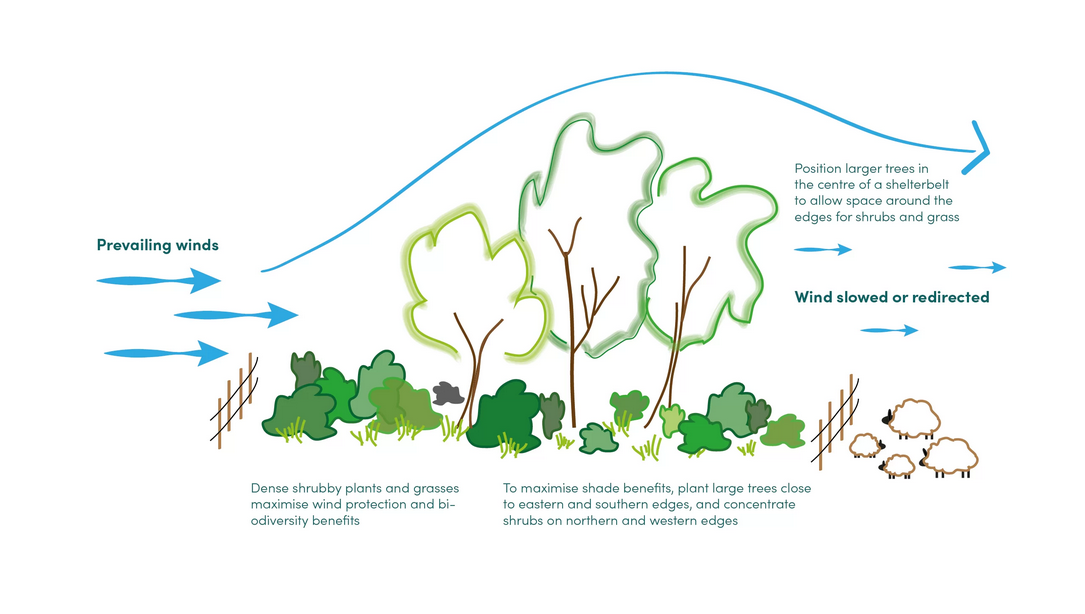
Source: Sustainable Farms ANU
Why is permeability important in a windbreak?
A windbreak of mixed native trees is most effective because it allows some wind through. If you try to stop the wind completely (for example with a high wall or dense pine tree plantings) you will create turbulence. Dense pine tree windbreaks cause turbulence upwind and downwind. Turbulence is uncomfortable for people and stock and it damages gardens and crops.
What to plant?
Plant tube stock from a local supplier. Plants grown locally will be best adapted to local climate and soils will have the best survival rates.
Species selection also varies with position in the landscape. Plantings for ridgelines will be different to plantings for low-lying areas.
If your planting also aims to screen noise then plants with dense foliage will be a good choice.
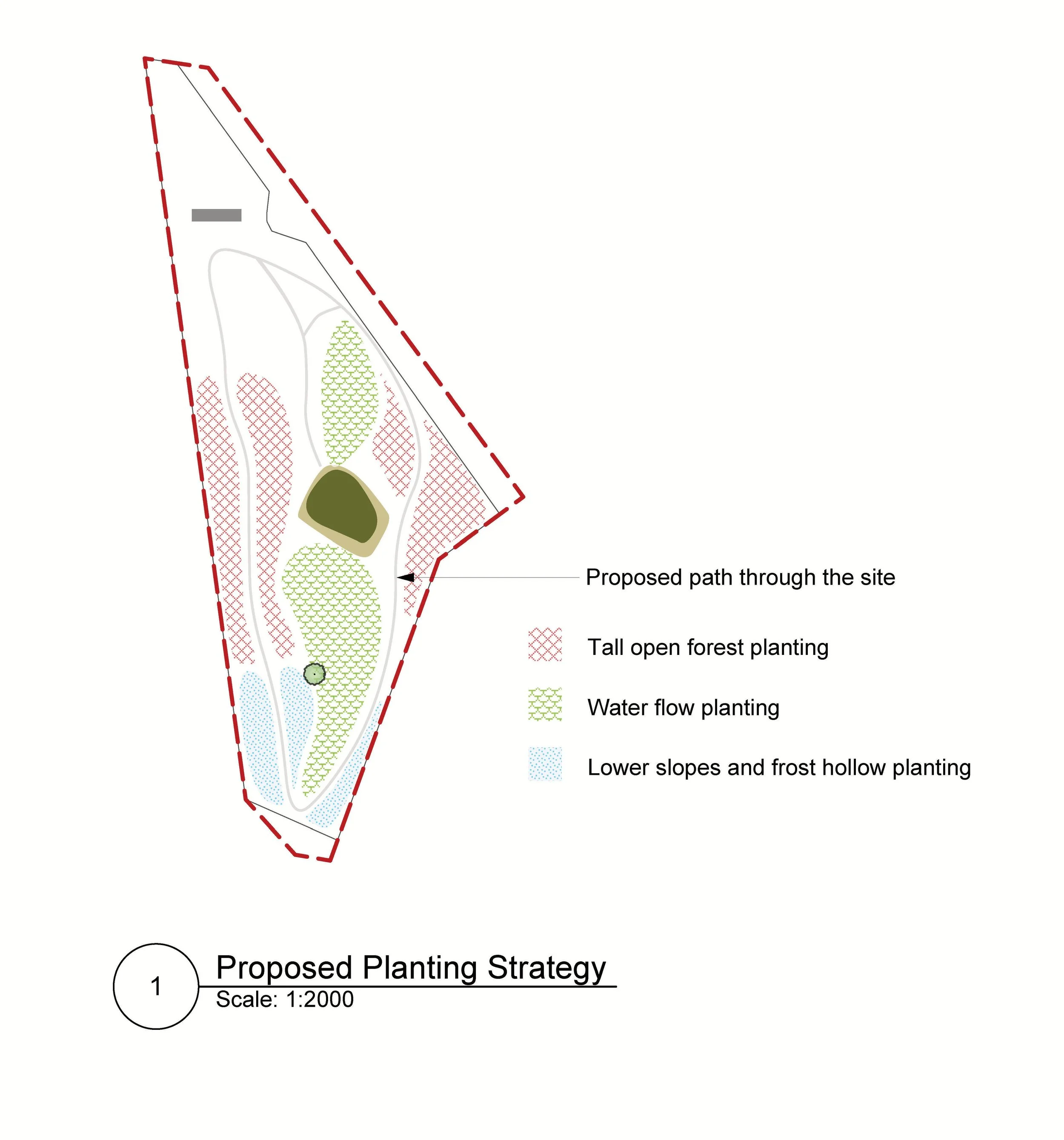
Example planting strategy for a larger site
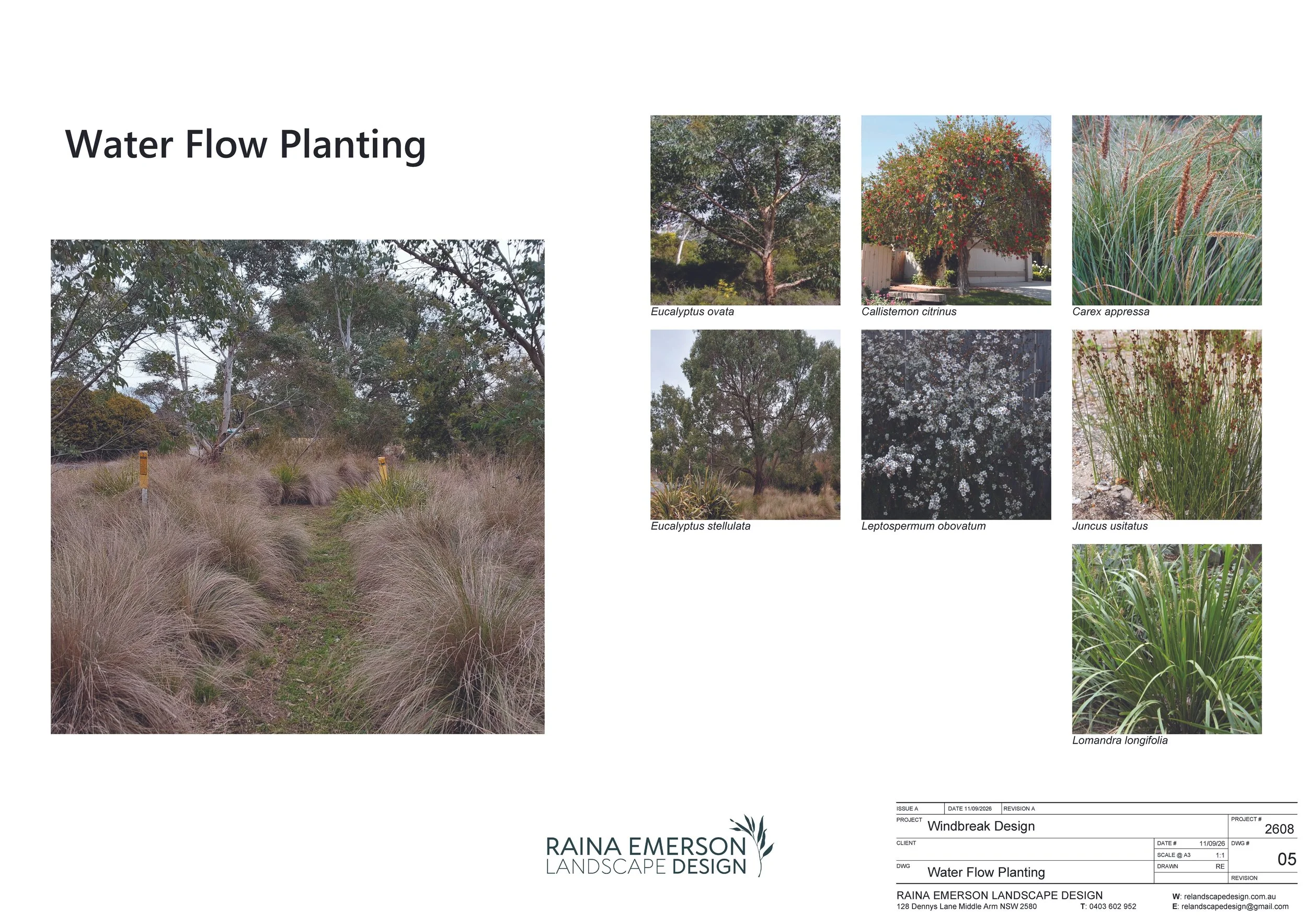
The value of a Whole-Property plan
A property plan will include a site analysis identifying prevailing wind direction, higher ridges, low lying areas and existing plant communities. This forms a strong basis for your species selection, and windbreak placement and helps to connect existing patches of remnant vegetation.
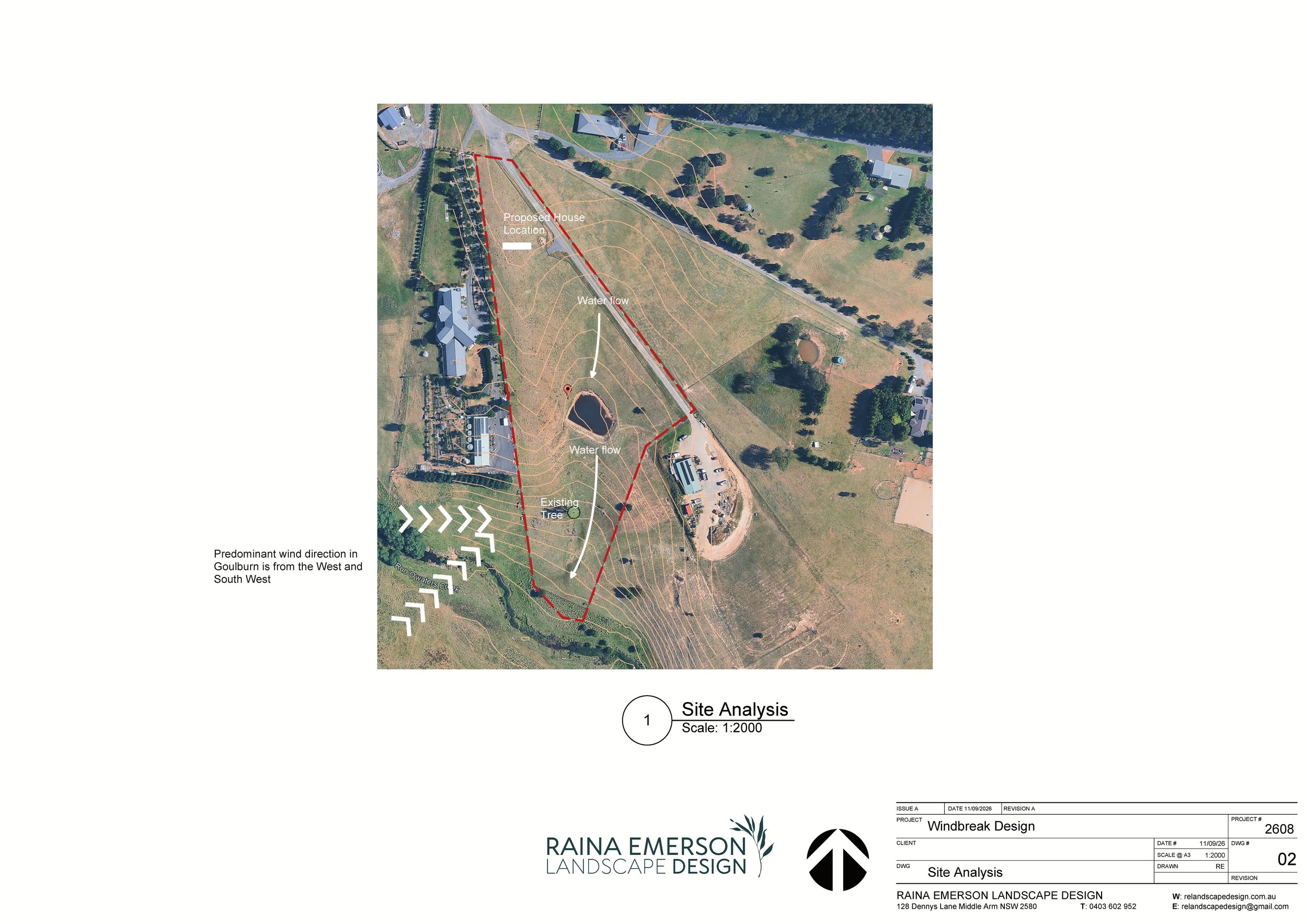
Example property plan